

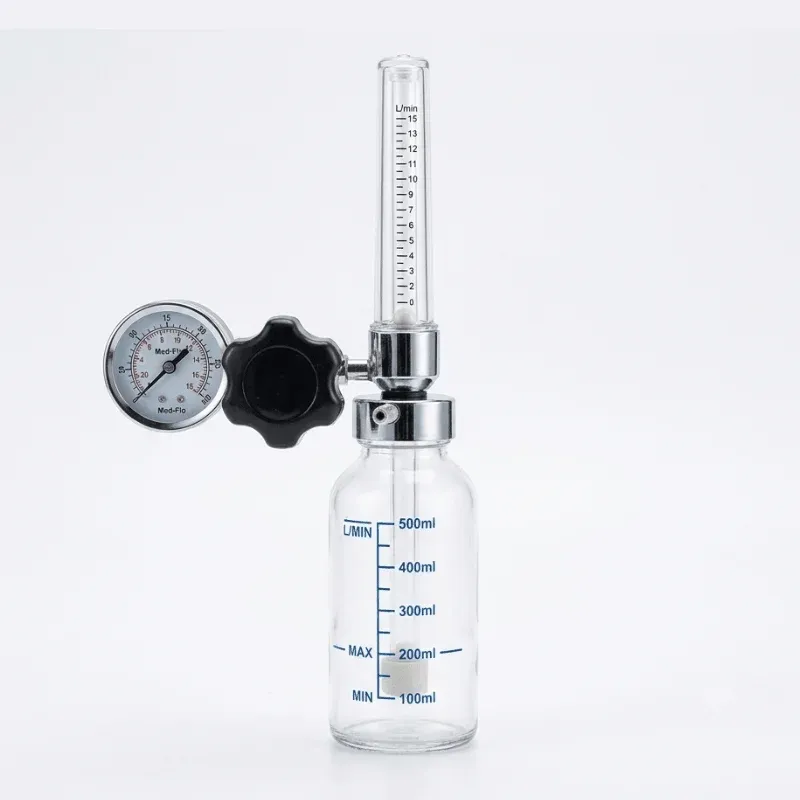
Oxygen Flow Meter
Original price was: ₹2,000.00.₹1,000.00Current price is: ₹1,000.00.
A patient has just been discharged on oxygen. The cylinder arrives, and the family asks the obvious question: how do we control it? That is what this 0-15 LPM oxygen flow mete is for. It fits on the cylinder, lets you set how much oxygen goes to the patient, and shows the flow on a clear tube. A round dial tells you how much oxygen is left in the cylinder, and the glass bottle underneath moistens the oxygen on its way out. Hospitals and clinics use the same kind of set on cylinders every day.
Description
What each part tells you
The round dial shows the pressure inside the cylinder. Think of it as a fuel gauge. When the needle drops towards the low end, the cylinder is nearly empty and it’s time to change it.
The black knob raises or lowers the flow. Turn it a little, wait, and look at the tube.
The tall tube shows the flow in litres per minute. A small float rises to the number you’ve set. This one is marked up to 15.
The glass bottle holds water. The oxygen bubbles through it and picks up some moisture before it goes to the mask or nasal tube.
People use the words regulator and flow meter for the same thing, but they are two jobs. The regulator part brings the pressure down from the cylinder to something safe to breathe. The flow meter part measures how much is going out. This set does both, so you can call it an oxygen regulator with humidifier bottle or a medical oxygen flow meter for cylinder use. Same product.
Check the fit before you order
Cylinders don’t all connect the same way, and a regulator that doesn’t match is the most common reason people send these back.
Look at the top of your cylinder. If the outlet is a thick threaded stem, and the old regulator was held on by a big nut, that’s bullnose. If the regulator was held by a C-shaped clamp with a screw, and there are two small holes beside the outlet, that’s pin index.
If you aren’t sure, send us a photo of the cylinder valve. We’d rather check first than have you carry the cylinder back.
A flow meter for a hospital wall outlet is a different product again, so don’t use one on a cylinder or the other way round.
Using oxygen safely
Oxygen won’t catch fire on its own, but it makes a small spark or flame far more dangerous. So:
Keep cigarettes, candles, stoves and anything that sparks well away. Don’t put oil, grease, balm or hand cream on the unit or its joints. Open the cylinder valve slowly, not with a sudden twist. After fitting, brush a little soapy water on the joints, and if you see bubbles forming, there’s a leak. Keep the cylinder upright, in a stand or strapped to a wall.
The humidifier bottle
Put distilled or sterile water in the bottle, up to the top mark and no higher. This bottle has marks from 100 to 500 ml. Change the water on the schedule your hospital or doctor gave you, and never top up old water, because it can grow germs. Wash and dry the bottle as the instructions say.
Not everybody needs the bottle. Your doctor decides. Glass is easy to see through and to clean, but it will break if it’s dropped, so keep it where it won’t get knocked.
For home care
If you want an oxygen flow regulator for home care, the rules above matter even more, because there’s no nurse down the corridor. Oxygen is a treatment, and the flow rate comes from the doctor. Don’t turn it up because the patient feels short of breath. Call the doctor, or emergency services if the breathing is getting worse.
Questions to put to any seller
- Is it bullnose or pin index?
- What is the body made of?
- How accurate is the reading?
- What comes in the box?
- Is there a warranty?
If a standard like ISO, CE or ISI is mentioned, ask to see the paper.
What it costs
Plain units start under ₹1,000. Mid-range sets are around ₹1,500 to ₹2,500, and brass regulators with two dials cost more. Compare the materials and the testing, not just the price.
You can buy oxygen regulator with flow meter online from AKMS Healthcare. Message us with a photo of your cylinder and we’ll confirm it fits.
Looking after it
Wipe it with a clean, dry cloth. No oil, ever. Keep it somewhere clean and dry, away from knocks. If it’s damaged or leaking, stop using it. Don’t try to repair a regulator yourself.
FAQs
The pressure left in the cylinder. It shows how much oxygen remains, not how fast it’s flowing.
Hold the unit upright, look at the tube at eye level, and read the number next to the float, following the reading point in the manual.
They’re two ways of connecting to a cylinder. Bullnose uses a threaded nut. Pin index uses a clamp with two pins. The regulator has to match the cylinder.
Distilled or sterile water, up to the top mark. Change it regularly and don’t top up old water.
Not always. Ask your doctor.
Reviews (0)
Related products
-
ICU Ventilator
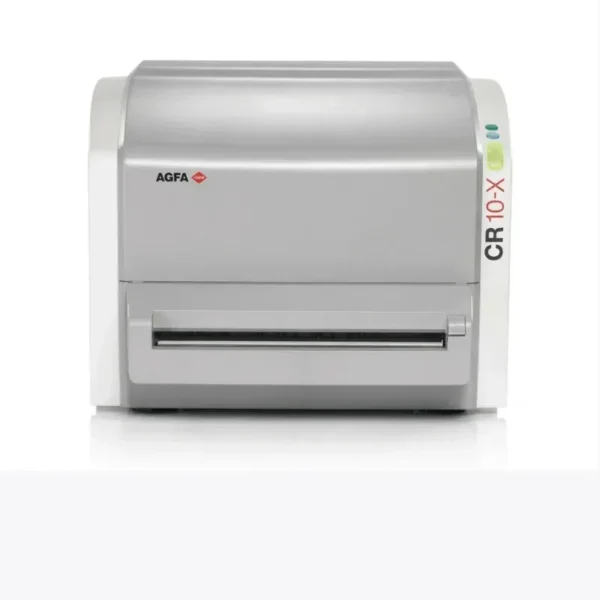
AGFA CR-10-X CR Machine
Original price was: ₹700,000.00.₹550,000.00Current price is: ₹550,000.00. Add to cart -
ICU Ventilator
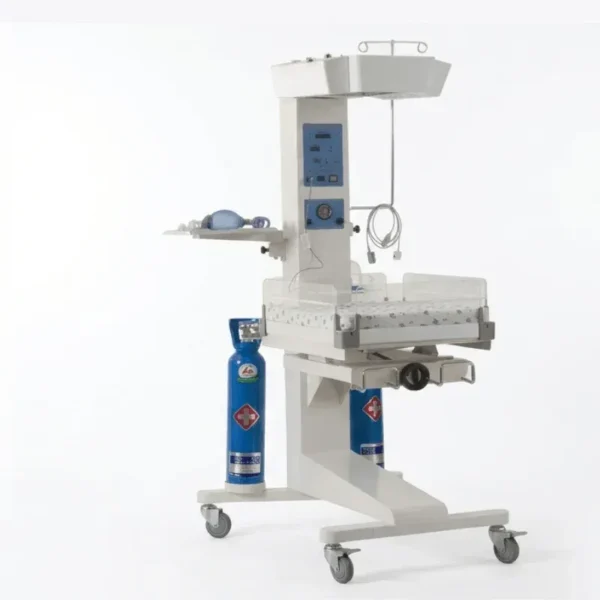
Infra Red Radiant baby Warmer
Original price was: ₹200,000.00.₹17,899.00Current price is: ₹17,899.00. Add to cart -
ICU Ventilator
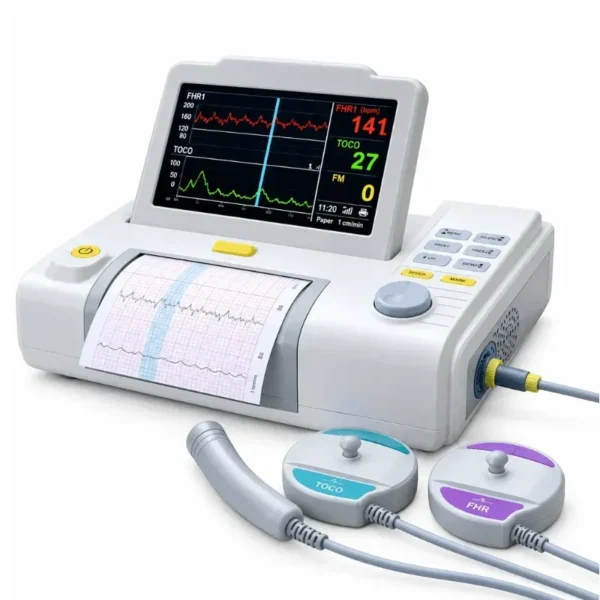
Fetal Monitor LPM-703
Original price was: ₹80,000.00.₹45,000.00Current price is: ₹45,000.00. Add to cart -
ICU Ventilator
12 Channel ECG Machine
Original price was: ₹100,000.00.₹48,000.00Current price is: ₹48,000.00. Add to cart
Reviews
There are no reviews yet.