

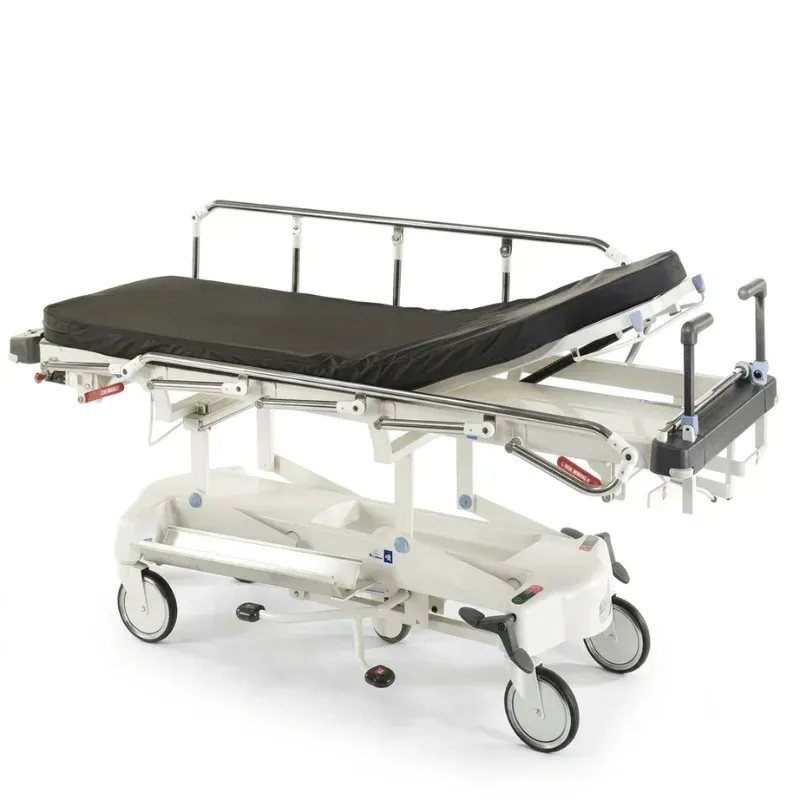
Emergency patient Trolley
Original price was: ₹35,000.00.₹27,899.00Current price is: ₹27,899.00.
When a patient comes in through the ER doors, there’s no time to figure out equipment on the spot, everything needs to already work the way it’s supposed to. That’s the whole reason an emergency patient trolley exists. This one comes with a backrest that tilts up for patients who need to sit slightly upright, foldable side railings that flip up in seconds for transport safety, and a base height that adjusts to match hospital beds or ambulance decks during transfer. It rolls on large caster wheels built for quick, stable movement, including tight turns through corridors and doorways. As a stretcher trolley, its whole design is built around speed and stability, not extra features nobody uses under pressure.
Description
Why Emergency Departments Actually Need This Specific Kind of Trolley
A regular bed doesn’t move fast enough, and a basic flat stretcher doesn’t give staff the adjustability an emergency situation calls for. The hospital transfer trolley sits right in between, mobile enough to get a patient from the ambulance bay to ER bed in one smooth motion, but still adjustable enough to handle immediate care needs along the way.
The backrest section raises independently, useful for patients with breathing difficulty, chest pain, or anyone who shouldn’t be kept fully flat during transport. It’s a manual adjustment in most models, quick to operate even when hands are full or gloved.
Side railings fold down flat when the trolley needs to slide right up against a hospital bed for a lateral patient transfer and flip back up the moment the patient is secured for movement. This single feature probably prevents more accidental falls during transport than anything else on the unit. Anyone who’s handled a disoriented or semi-conscious patient knows how quickly things can go wrong without a rail in place.
Built for Transfers, Not Just Storage
As an The wheels are large, smooth-rolling casters, meant to handle quick directional changes without the trolley tipping or catching on uneven flooring. Most units include brake locks on at least two wheels, so once the trolley reaches the bedside, it locks in place rather than drifting mid-transfer. The mattress or top surface is generally cushioned but firm, giving enough support for short-to-medium duration use without compromising spinal stability during transport, an important balance in trauma and emergency cases specifically. Check the backrest crank and railing hinges every so often; they get used constantly in an ER setting and tend to loosen faster than in slower-paced departments. Wipe the mattress and frame down after every patient transfer with standard hospital disinfectant. Keep the wheel locks tested regularly since a trolley that doesn’t lock properly during a transfer is a genuine safety risk, not just an inconvenience. Where It Gets Used Daily
A Few Notes on Upkeep
Reviews (0)
Related products
-
Hospital Trolleys
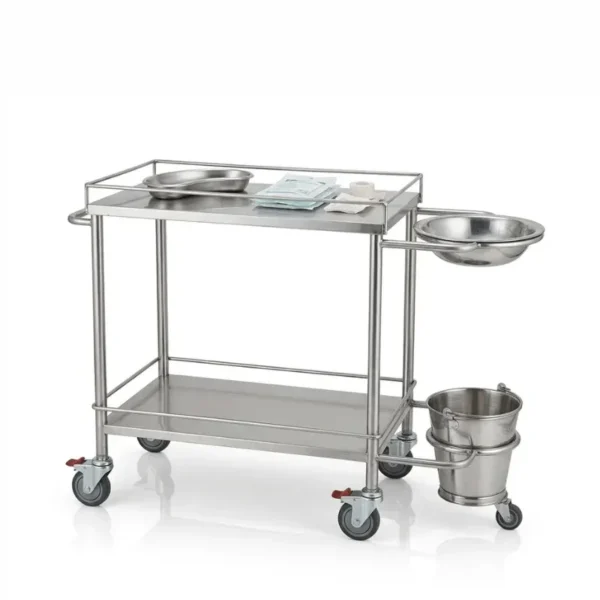
Dressing Trolley SS
Original price was: ₹7,000.00.₹3,499.00Current price is: ₹3,499.00. Add to cart -
Hospital Trolleys
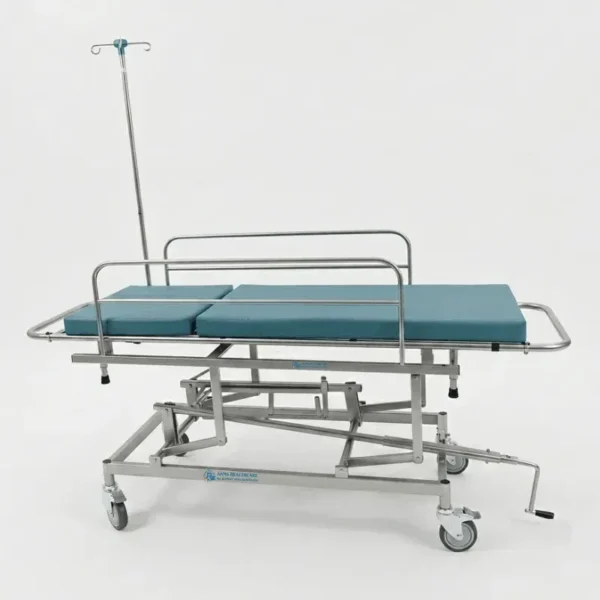
Deluxe Stretcher Trolley
Original price was: ₹30,000.00.₹24,999.00Current price is: ₹24,999.00. Add to cart -
Hospital Trolleys
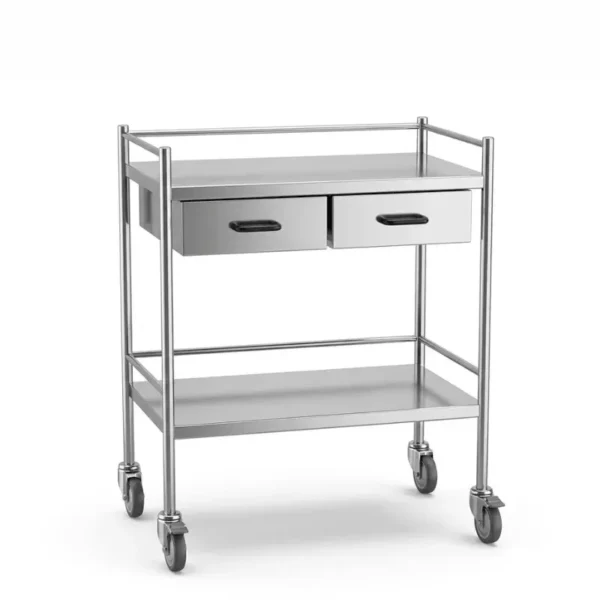
Box Type Instrument Trolley
Original price was: ₹10,000.00.₹6,499.00Current price is: ₹6,499.00. Add to cart -
Hospital Trolleys
Bio Waste Trolley
Original price was: ₹15,999.00.₹11,999.00Current price is: ₹11,999.00. Add to cart
Reviews
There are no reviews yet.